
- October 31, 2026
- 19
- Travel
Drive east from Fethiye towards Saklıkent, look up at the right moment, and you’ll spot it: a towering rock face carved with ancient tombs, crowned by the silhouette of a hilltop fortress. This is Tlos. Recorded by the Hittites, flourishing under Rome and later home to an Ottoman lord’s mansion, it holds thousands of years of stories on a single hill.
And this season, there’s a brand-new reason to visit.
A brief history of Tlos
Tlos is one of the oldest known settlements in Lycia. It appears as “Dalawa” in Hittite records from the 14th century BC and as “Tlawa” in Lycian inscriptions. Excavations here have revealed layers reaching back to the Chalcolithic, Bronze and Iron Ages.
In antiquity, Tlos was one of the six great cities of the Lycian League holding three votes each — standing alongside Patara, Xanthos and Pınara as a leading city of the Xanthos Valley. Today, it is part of the Lycian cities listed on the UNESCO World Heritage Tentative List.
The city’s mythology comes down to one name: Bellerophon. Legend tells how the Lycian king Iobates sent this hero, riding the winged horse Pegasus, to defeat the Chimera — a fire-breathing creature with the head of a lion, the body of a goat and the tail of a serpent. Tlos is remembered as the city where Bellerophon lived and was laid to rest; one of its ancient citizen groups even carried his name.
What to see
The Tomb of Bellerophon
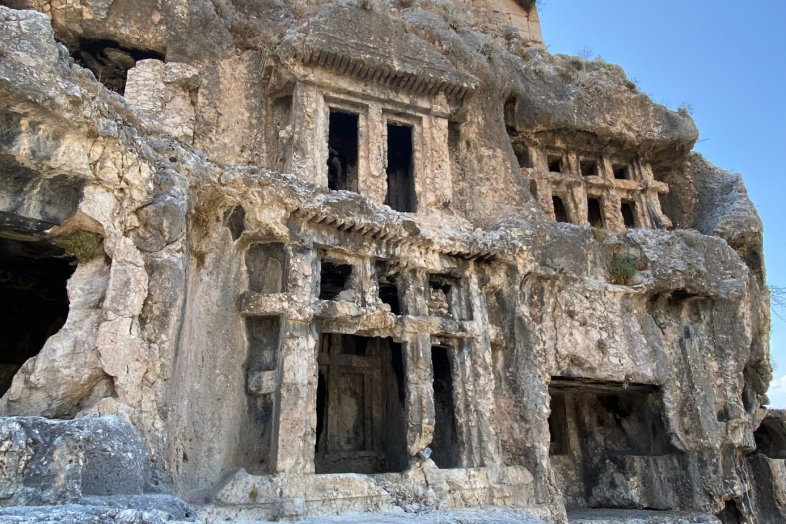
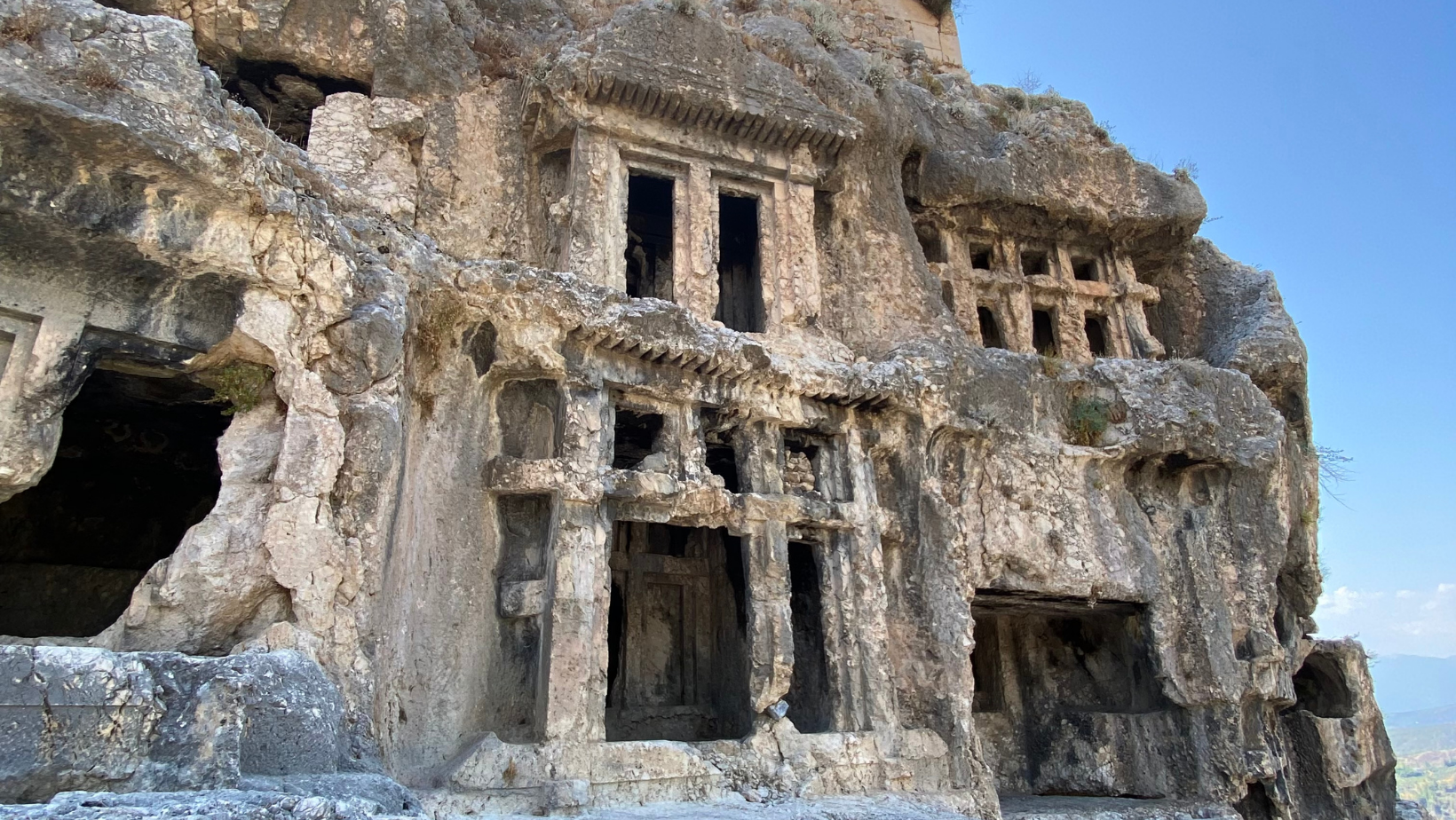
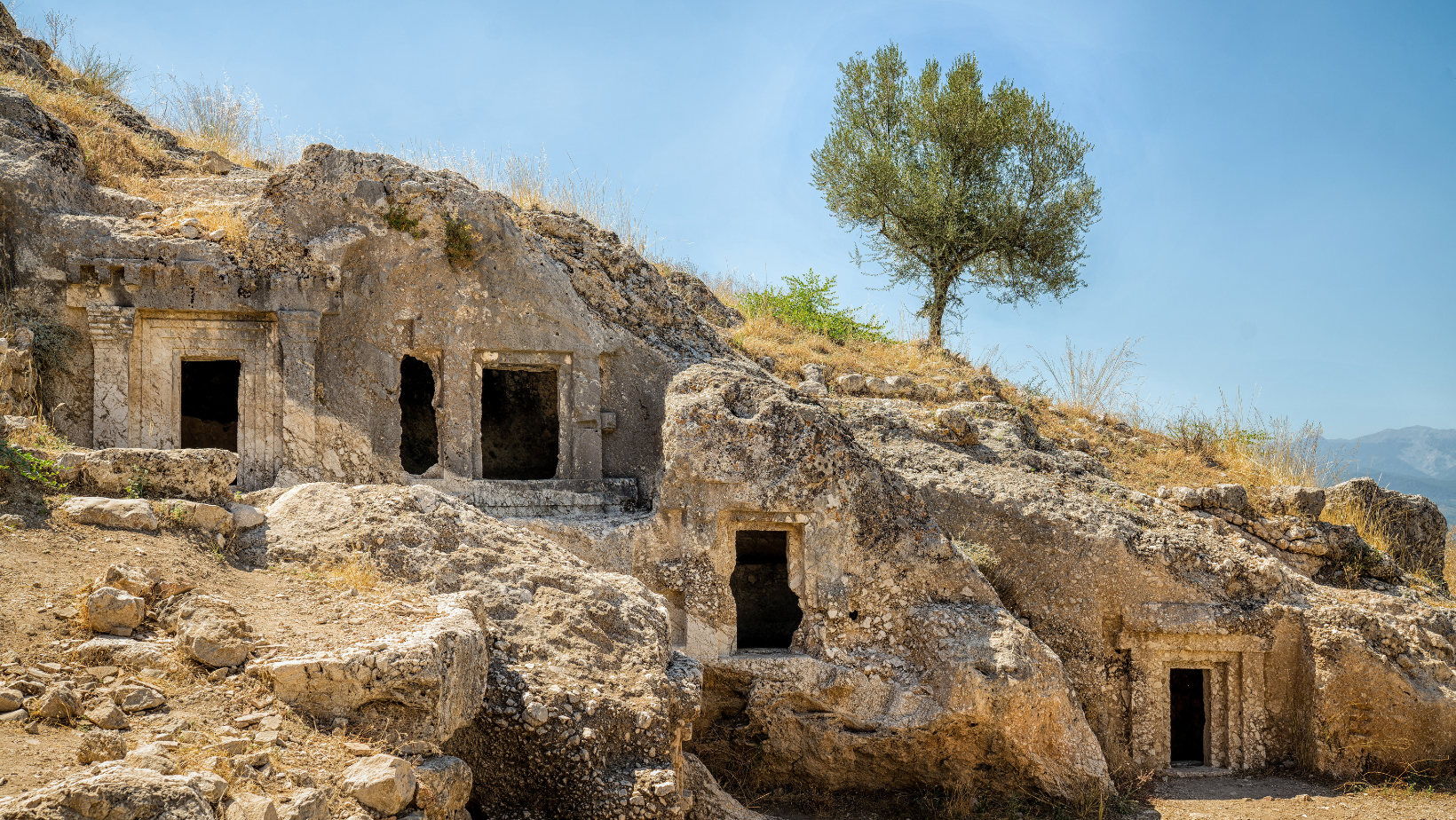
The icon of Tlos. Carved into the northern face of the acropolis, this grand temple-style tomb features a four-column facade, and a relief in its porch shows Bellerophon astride Pegasus. A short scenic path leads you right up to it — comfortable walking shoes make the visit easy.
The ancient theatre — beautifully restored
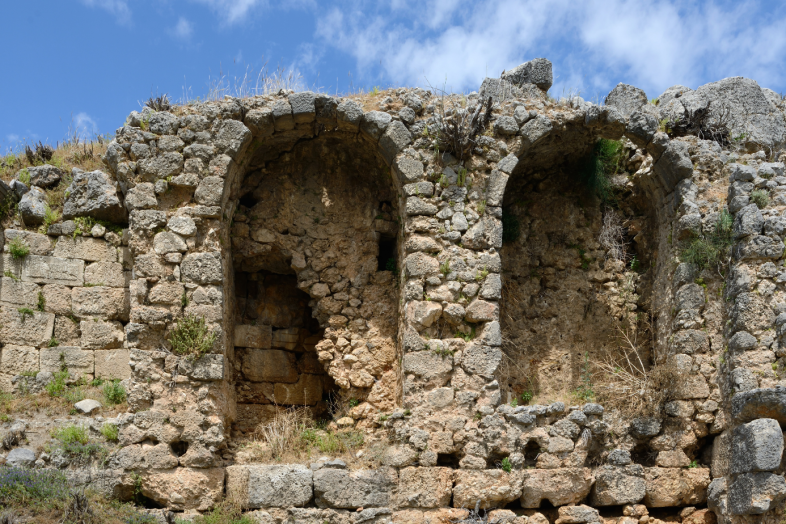
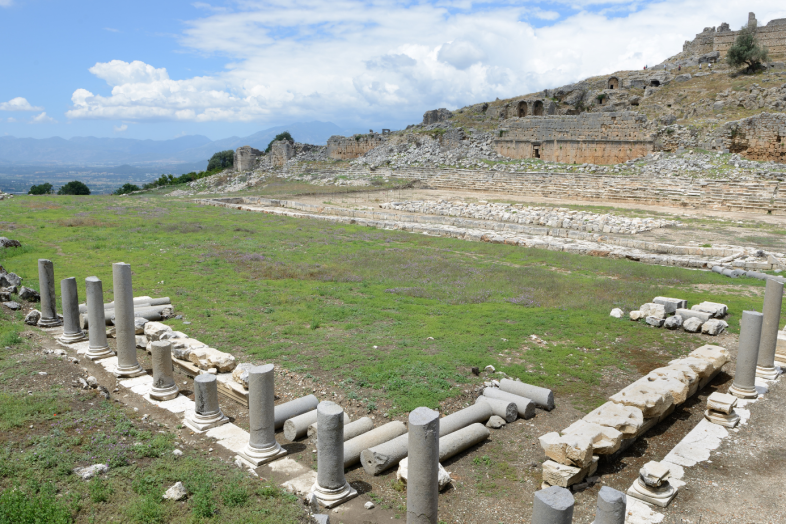
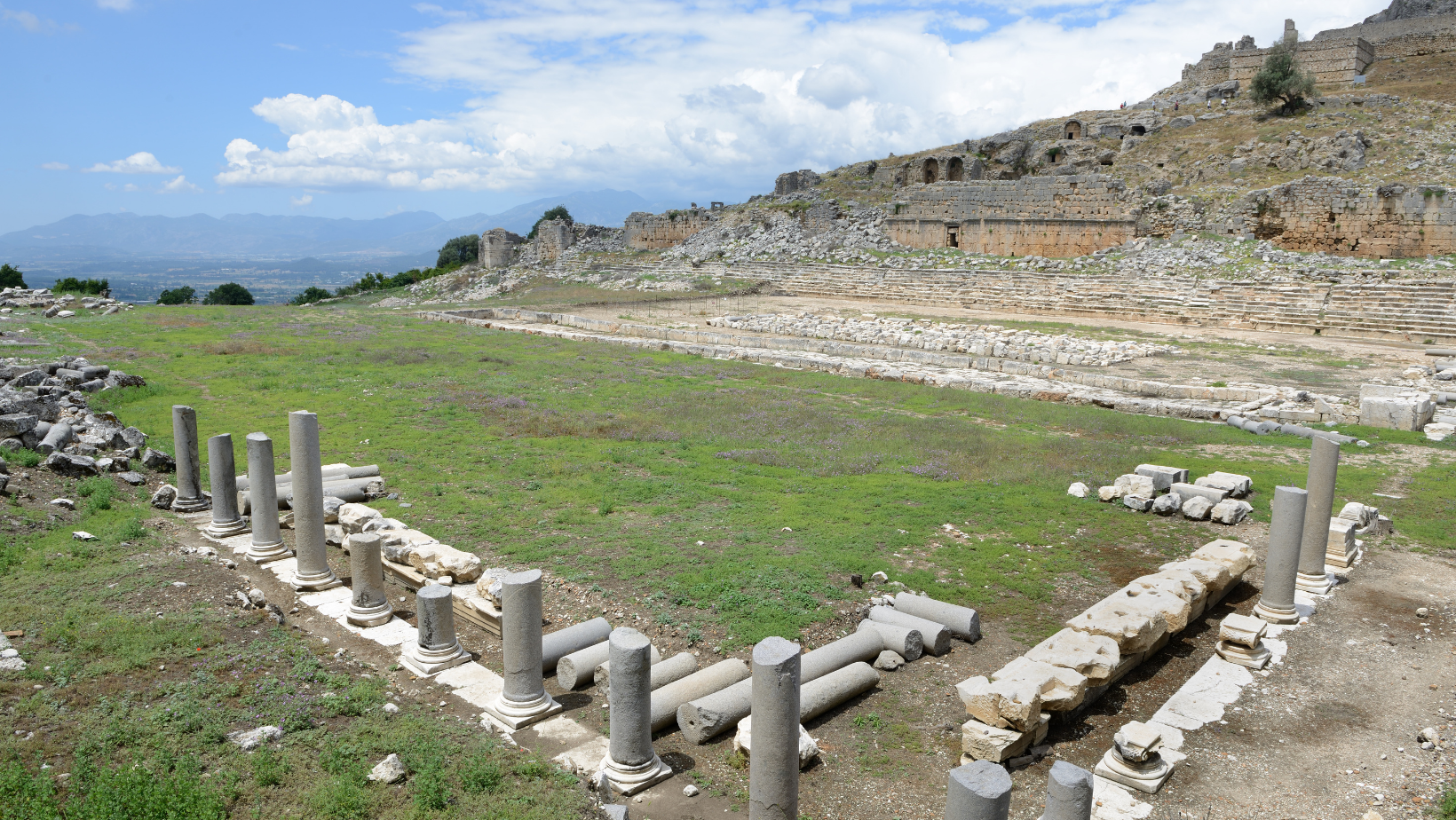
A comprehensive restoration of the Tlos theatre, begun in 2023, was completed in summer 2026, rebuilt almost entirely with its own original stones. The theatre is now lit by a solar energy system, designed to welcome evening visits and cultural events. For the first time in years, you can take in the theatre in all its glory.
The acropolis and the fortress of Kanlı Ali Ağa
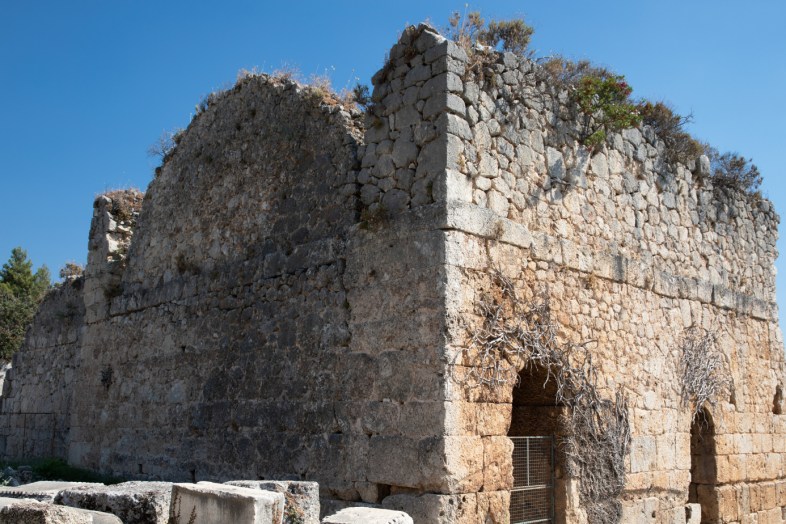
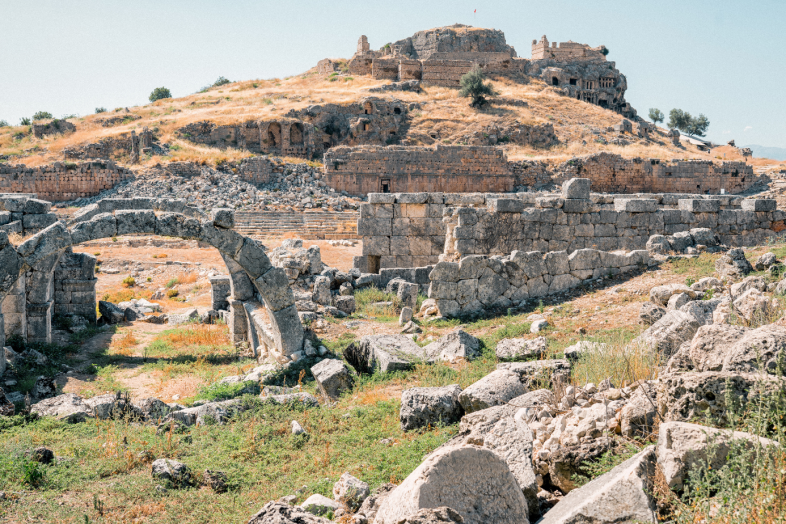
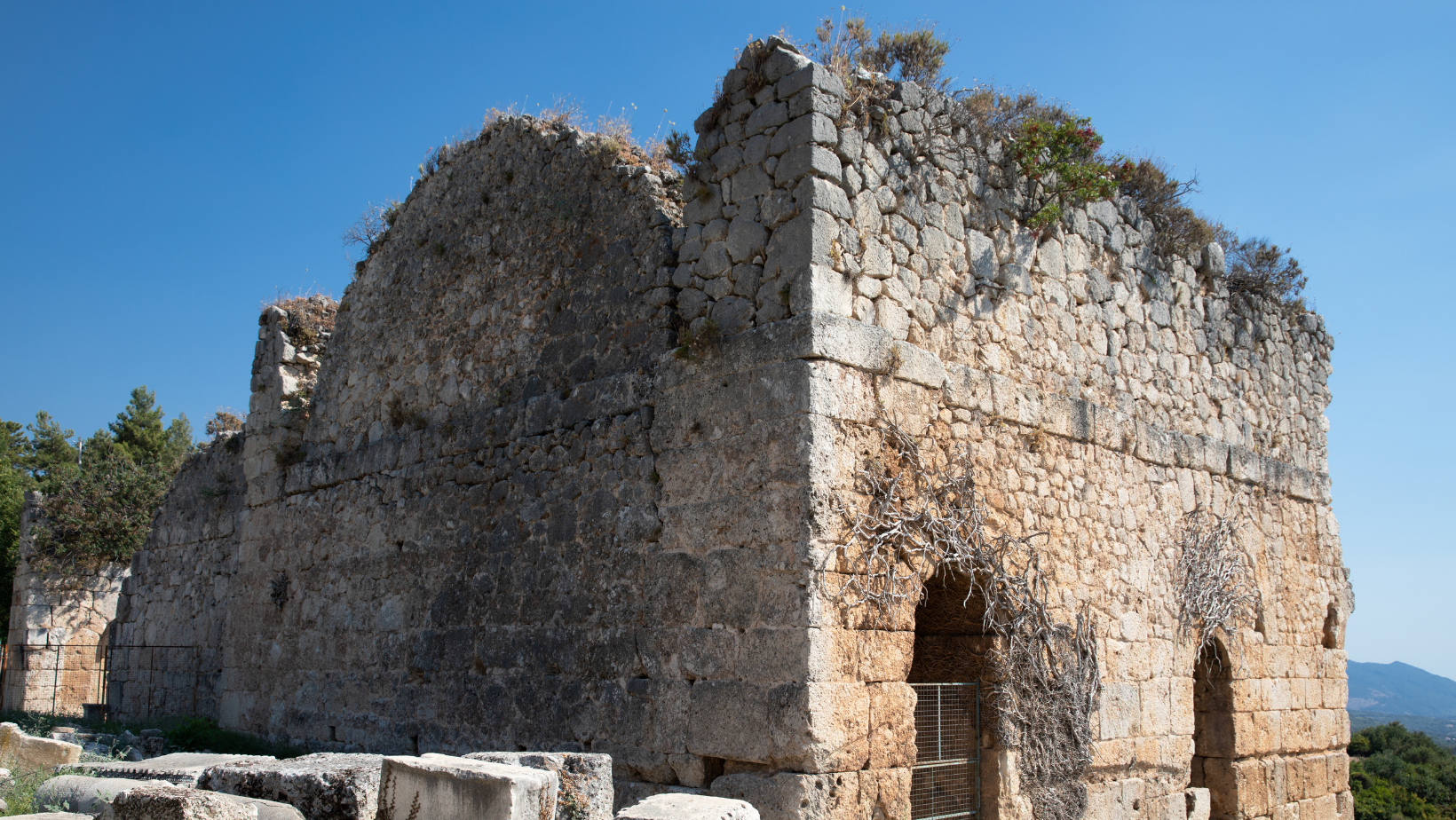
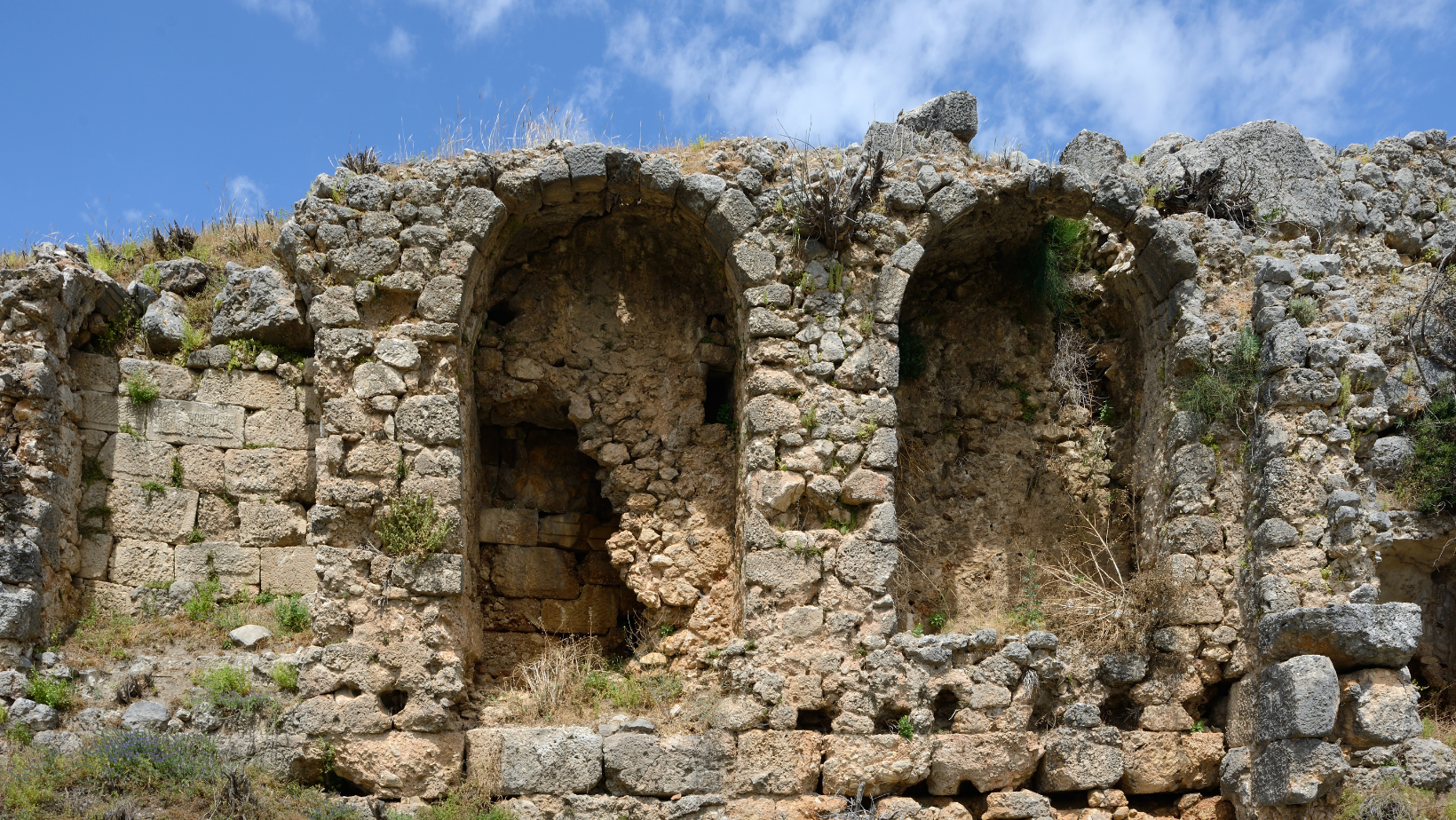
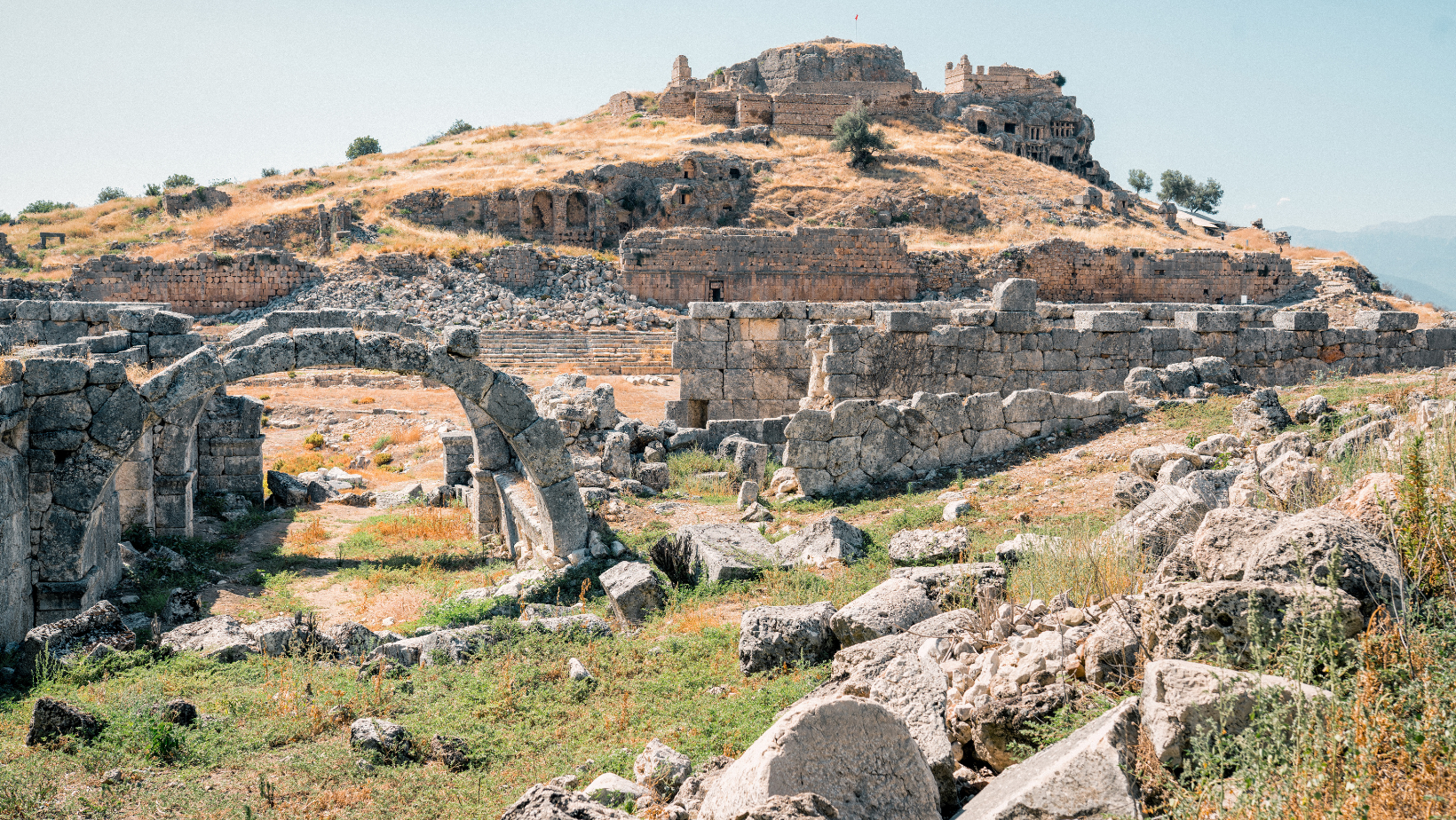
At the summit, an Ottoman-era fortress rises on top of Lycian and Roman walls. Built for the local lord Kanlı Ali Ağa, it captures the remarkable span of Tlos’s history in a single view. From the top, the panorama stretches across the Xanthos Valley to the surrounding mountains — a perfect reward for the climb.
The stadium, Great Bath and agora
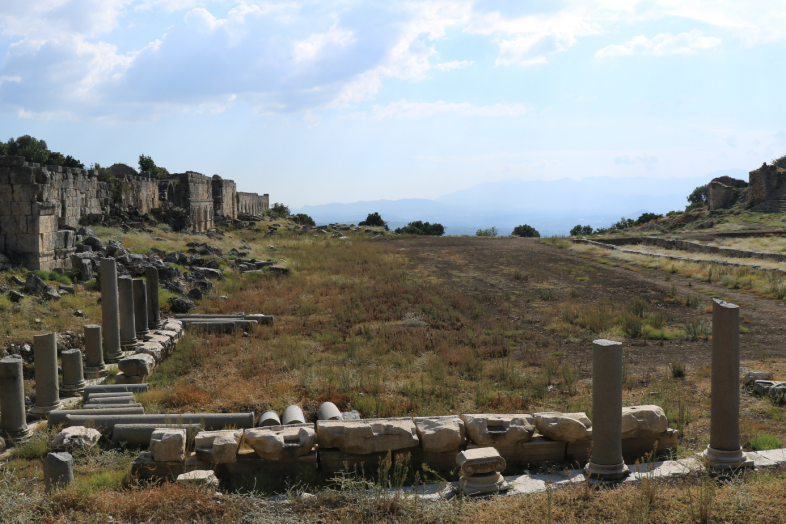
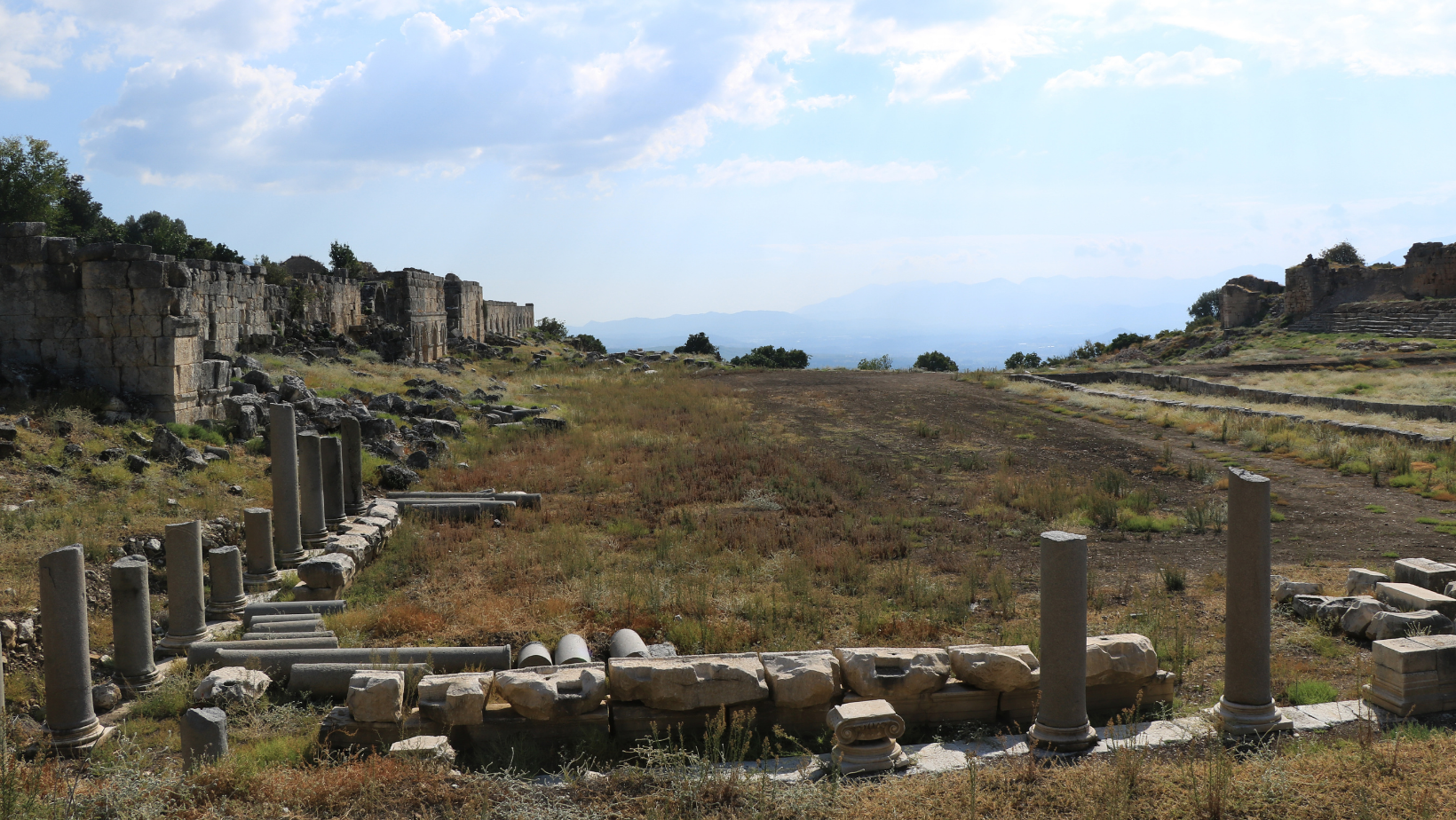
Stretching along the eastern foot of the acropolis, the stadium reveals the place sport held in city life. The Great Bath and the agora speak to the prosperity Tlos enjoyed in the Roman era.
The rock-cut necropolis
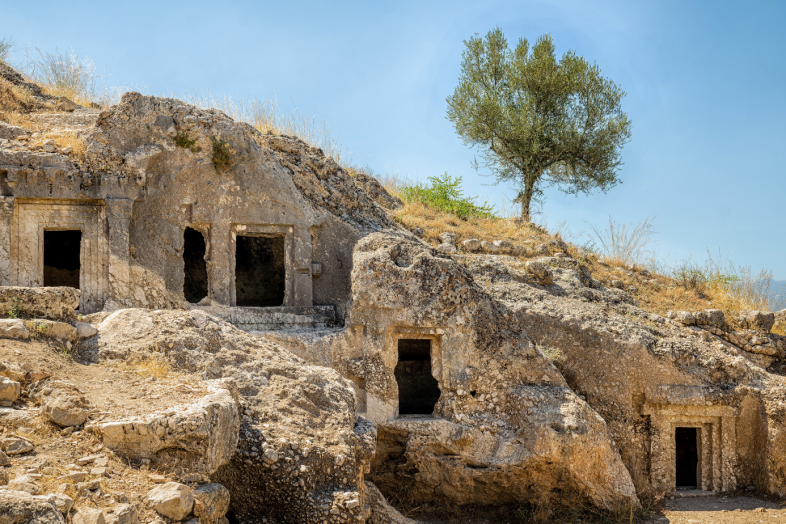
Around the Tomb of Bellerophon, you’ll find a cluster of Lycian rock-cut tombs in house and temple styles. If you’ve admired the Amyntas Rock Tombs in Fethiye, here you’ll discover the same tradition in a quieter, more intimate setting.
Practical information
- Location: Yaka, Seydikemer / Muğla — around 42 km from Fethiye.
- From Ölüdeniz: About an hour by car.
- Opening hours: Winter season (1 November – 1 April): daily 08:30–17:30. Summer season: 08:30–19:30.
- How long to spend: 1.5–2 hours covers the highlights; allow around 2.5 hours to include the acropolis and the tombs.
- What to bring: Comfortable walking shoes, water and an extra layer for the breezy hilltop.
Why autumn and winter are ideal
Crisp air turns the walk up to the acropolis into a pleasure, the paths are wonderfully peaceful, and the soft winter light makes the rock tombs glow — a dream for photographers. Days are shorter at this time of year, so plan your visit for the morning and enjoy the rest of the day at a relaxed pace.
Pair it with
- Saklıkent Canyon: Just a short drive away. Water levels change with the seasons, so ask locally about that day’s conditions and make the most of your visit.
- Yaka Park: A leafy spot near Tlos, known for its trout restaurants set beside flowing water — a lovely place for lunch after exploring.
Tlos is one of the richest, most layered ancient cities around Fethiye: Hittite records, Lycian tombs, a Roman theatre and an Ottoman fortress, all on one hill. With its freshly restored theatre, there may be no better time to discover it than this season.

Add Comment
You must be logged in to post a comment.